In the last version with two arrays there’s a repeat event that checks the ‘before’ array left to right, top to bottom, and writes to ‘after’ array. If you use one array the information gets passed on to the next repeat (ie writing before[34] to before[35] in the next repeat a millisecond later before [35] gets written to before [36]). Once the repeat is over ‘after’ is copied to ‘before’
But you could try it reading the tilemap data left to right, top to bottom with two tilemaps in the same way.
I thought it would be difficult, but it turned out to be much easier.
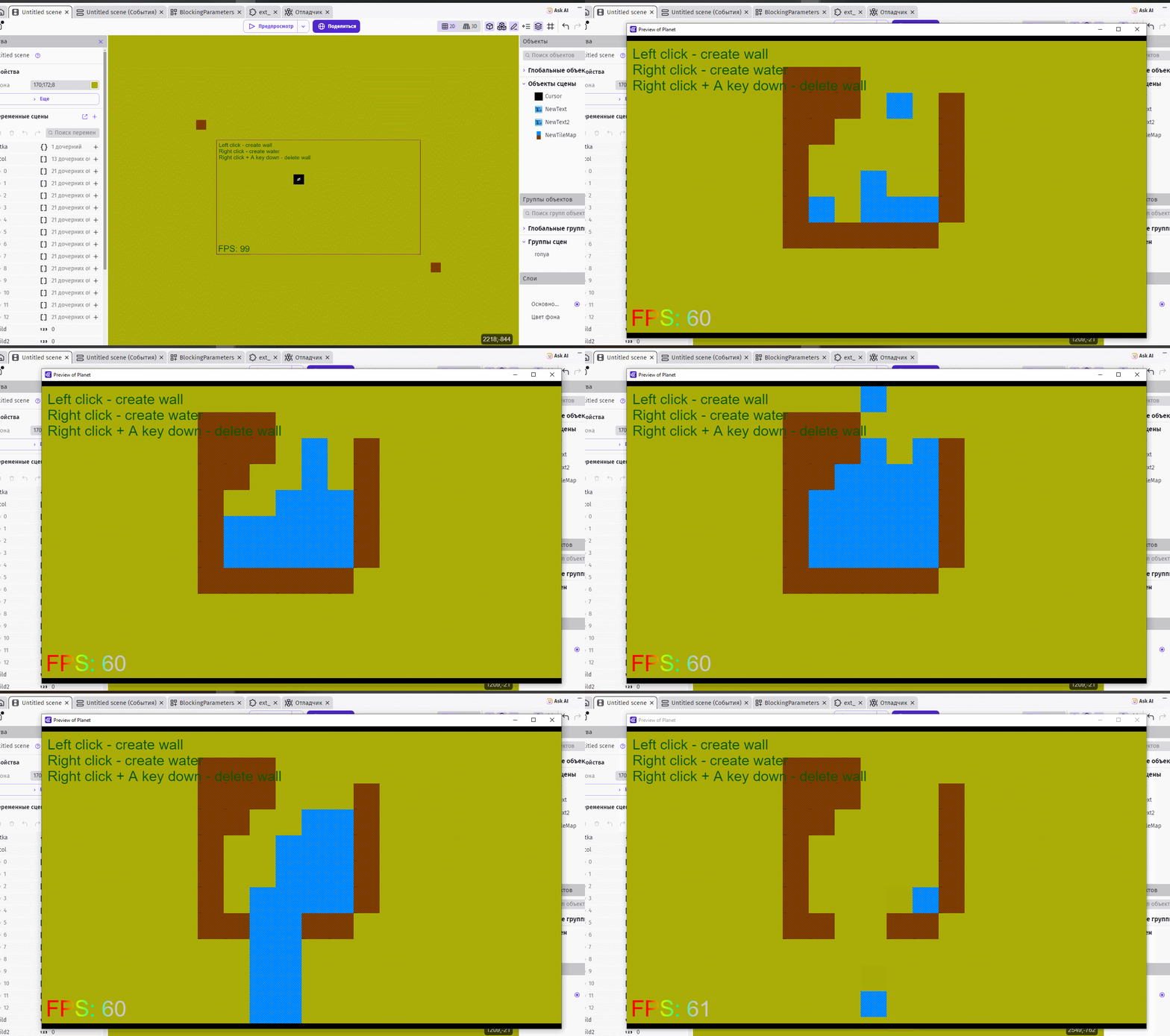
Great …Which way did you do it? With object logic or using arrays?
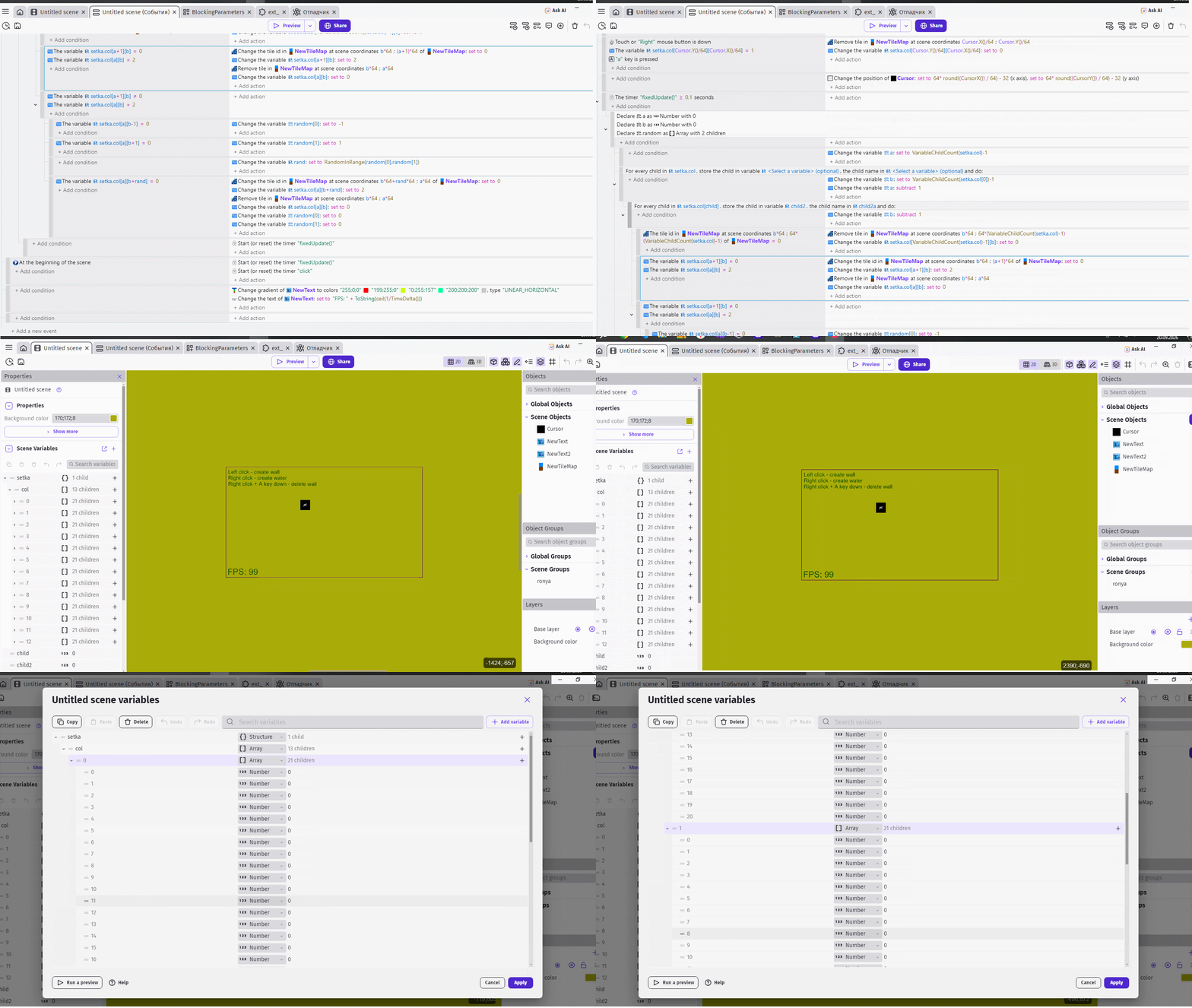
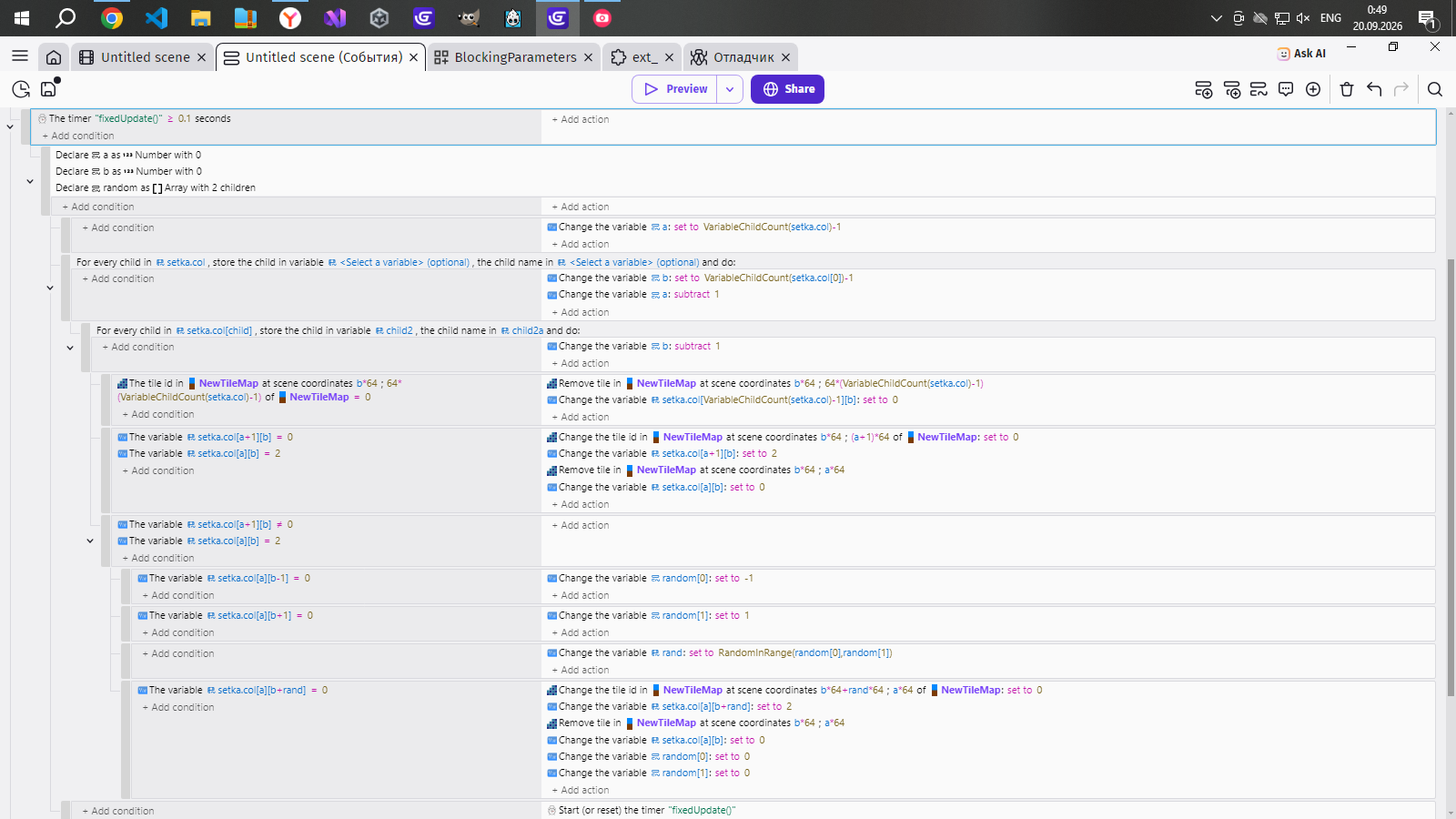
I found it easier using arrays than with objects and point inside checks
Using an arrays in array
I did mine in three different ways and yours actually looks simpler than mine. In all three of mine i had a variable to determine the next move of the water (0 was down left 1 and right 2 and stop 3) and also a variable to count bounces and stop going left and right after 5 bounces. The way i liked the best was using objects and an array, as you then have a list of cells to focus on instead of scanning the whole thing, and you can move the object smoothly to the next cell using lerp if that’s your thing!
It got ridiculous when referring to objects in the first version. I had to first store the id and x y of all the water and then run through that data to check the adjacent positions for the group contains water and wall.
I quite fancy creating a cellular game engine with different objects that follow different rules. It would be a bit like reinventing the wheel, but square, attaching those wheels to a home made go kart and taking it to the top of a steep hill (greater than 60 degrees) and shouting ‘Look at ME! Look what i’ve done!!’ as you judder and somersault back down again…adjust the wheels, reattach, and try again.