The 3d physics behavior doesn’t seem to have TimeDelta() implemented on it from the getgo, and multiplying impulses by TimeDelta() gives you very inconsistent results.
I doubt people will take to download your project. You should take a screenshot of your events. People will be able to tell you if you are using the action correctly or not.
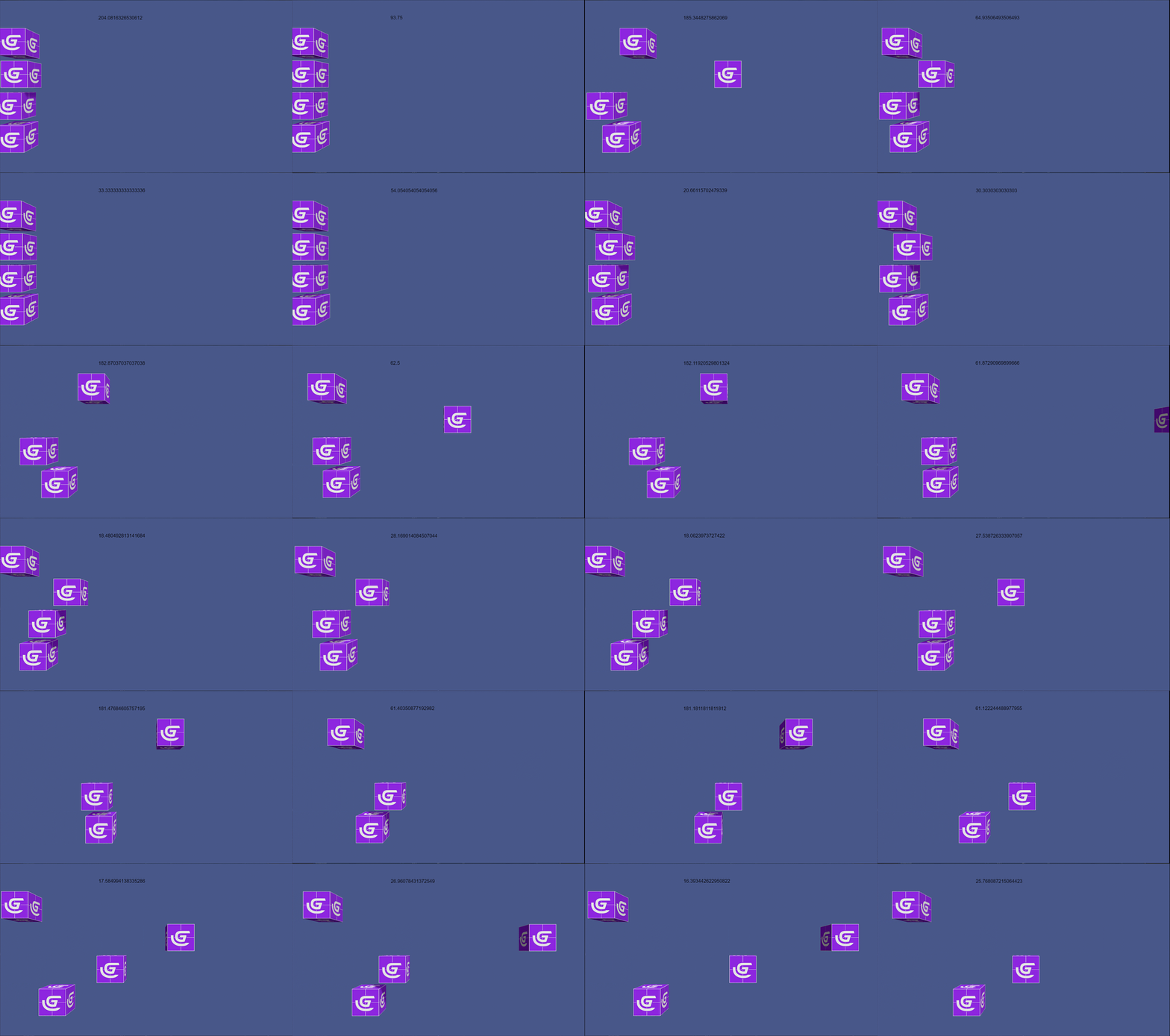
Here’s a comparison on different Frames per second (the boxes are stacked in the same order as their events, the top and bottom ones have a linear damping of 20 while the middle ones have a linear damping of 0)
you can change the linear velocity, is more stable in my tests since you can change to an constant value or add an limit to it. forces will keep adding value every frame, thats why is inconsistent in different framerates.
This is correct. The above events will add those impulses and force every frame as there is no conditions nor trigger once. It is unrelated to the physics engine itself and is related to the event setup.
I mean that’s still a shame because doing this would be far easier than whatever calculations I’d have to do just to use linear velocities. Can’t even have other objects collide with it causing some bouncing as I’m constantly overwriting the velocities.
(this isn’t the character I’m talking about it’s just an example that also doesn’t work with TimeDelta())
So the only way for me to properly move my character is to change the linear velocities?
This is not true. The physics engine expects the force action to be called every frame (as long as the force should applies). It will take into account the time delta in its calculation.
With a variable frame rate, it’s not possible to reproduce the exact same trajectories (for instance for a Pachinko), but players won’t tell the difference for most games.
Notice how the only one that stays consistent accross different framerates is the third box, which has a force applied to it but has no linear damping unlike the one below it, what do I make up from this?
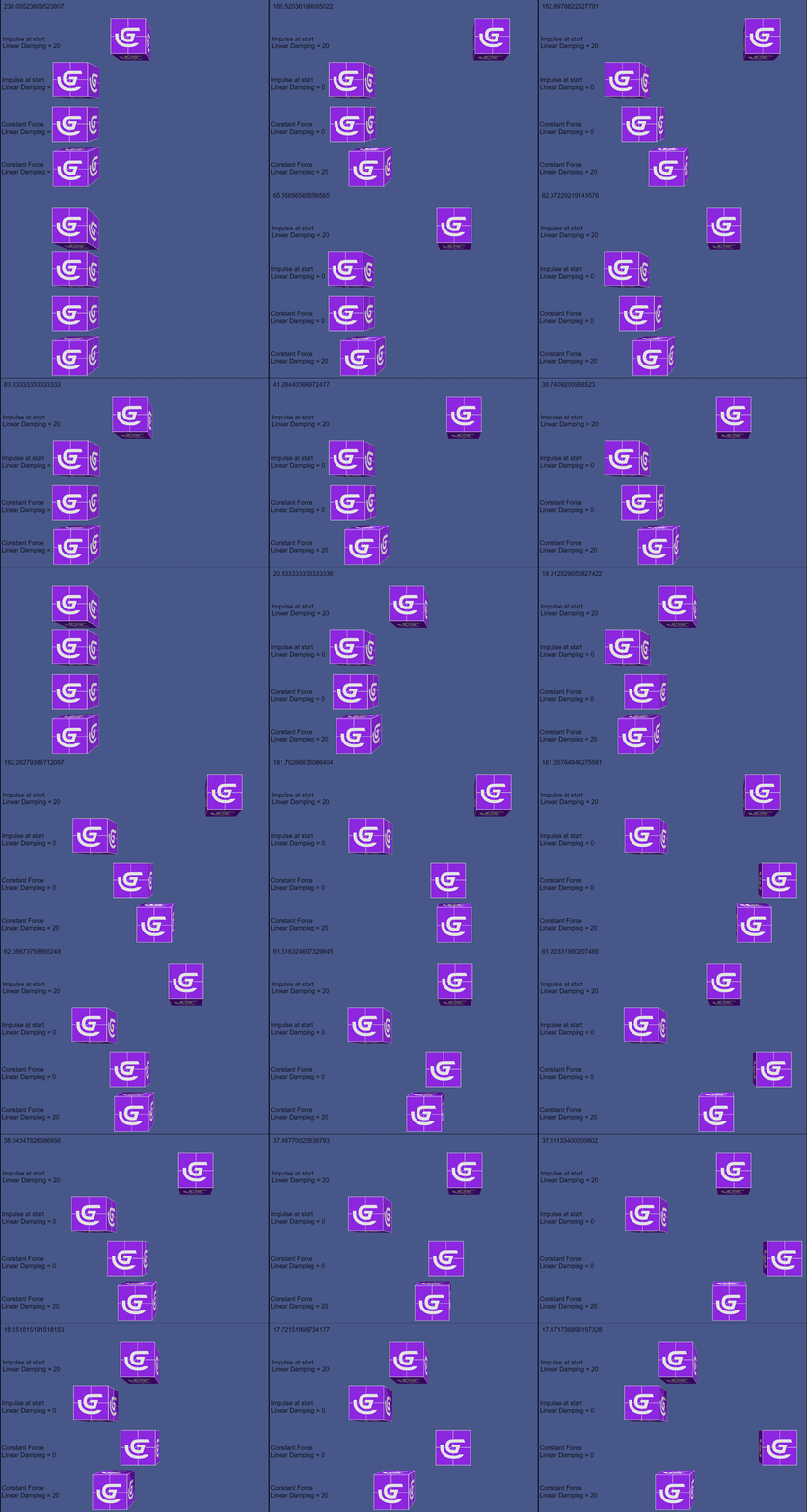
Actually no, here in this comparison I heard what you said about how impulses should be handled and applied an impulse ONLY ONCE at the start of the scene for the two boxes at the top
You can clearly see a difference here too (the box at the top with linear damping)
Once again, the only boxes that stay consistent are the ones without any linear damping, the two in the middle